
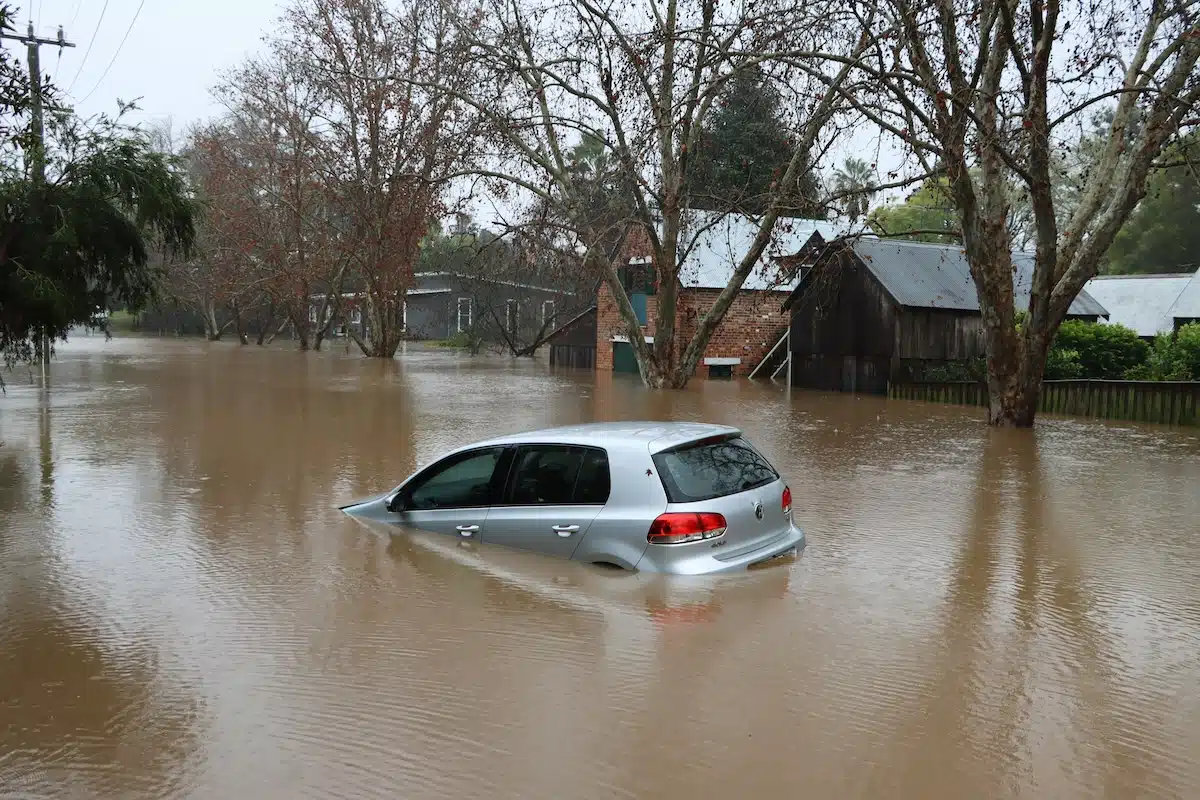
Floods are among the most devastating natural disasters, affecting millions of people worldwide each year. In many regions, especially in Africa, communities lack early warning systems that could help them prepare and evacuate before disaster strikes. This is where machine learning and data science can make a real difference.
I recently completed a comprehensive project comparing two regression models for flood probability prediction as part of an Artificial Intelligence practical work. This project demonstrates how different machine learning approaches can be applied to solve real-world problems affecting vulnerable communities.
"Technology should serve humanity. By using AI to predict floods, we're not just building algorithms—we're potentially saving lives and protecting livelihoods."
The Dataset
The project uses a substantial dataset with:
- 1,117,957 observations - A large-scale dataset ensuring robust model training
- 20 explanatory variables - Including monsoon intensity, topography drainage, river management, deforestation, urbanization, climate change, dam quality, siltation, agricultural practices, and more
- Target variable: FloodProbability - The probability of flooding in a given area
- No missing values - Clean, ready-to-use data
Key Variables Analyzed
The dataset includes critical factors such as:
- MonsoonIntensity - Intensity of monsoon seasons
- TopographyDrainage - Topographic drainage characteristics
- CoastalVulnerability - Vulnerability of coastal areas
- RiverManagement - Quality of river management systems
- Deforestation - Level of deforestation in the area
- Urbanization - Urban development impact
- ClimateChange - Climate change indicators
- PopulationScore - Population density and distribution
- And 12 more environmental and socio-economic factors
Models Compared
I compared two regression models to identify the best approach:
1. Multiple Linear Regression
Used as a baseline model, Multiple Linear Regression provides:
- Simple interpretation of relationships between variables
- Fast training and low memory consumption
- Clear understanding of variable coefficients
- Excellent for linear relationships
2. Random Forest Regressor
A powerful ensemble method that:
- Captures non-linear relationships
- Handles complex interactions between variables
- Provides feature importance rankings
- Uses 100 estimators with max_depth=20
Results and Findings
The comparison revealed interesting insights:
Multiple Linear Regression Performance
- R² Score: 0.8449 on validation data
- RMSE: 0.0201
- MAE: 0.0158
- Key finding: Excellent balance between train (0.8450) and validation (0.8449) - no overfitting detected
Random Forest Performance
- R² Score: 0.6324 on validation data
- RMSE: 0.0309
- MAE: 0.0252
- Key finding: Significant overfitting - train R² of 0.8430 vs validation R² of 0.6324 (gap of 0.21)
Most Important Variables
Both models identified critical factors, though with different priorities:
Linear Regression Top 5:
- CoastalVulnerability
- TopographyDrainage
- PoliticalFactors
- PopulationScore
- Urbanization
Random Forest Top 5:
- MonsoonIntensity
- Siltation
- PopulationScore
- Deforestation
- Landslides
Conclusion: Why Linear Regression Won
Despite Random Forest's ability to capture non-linear relationships, Multiple Linear Regression emerged as the superior model for this specific problem:
- Better performance: 0.8449 R² vs 0.6324 for Random Forest
- Better generalization: Minimal gap between train and validation (0.0001)
- No overfitting: Excellent bias-variance balance
- Interpretability: Clear understanding of each variable's impact
- Efficiency: Faster training and lower resource consumption
This finding suggests that the relationships in this flood prediction dataset are primarily linear, making the simpler model more appropriate than the complex ensemble method.
Technical Implementation
The project was implemented using:
- Python with Jupyter Notebooks
- Pandas & NumPy for data manipulation
- Scikit-learn for machine learning models
- Matplotlib & Seaborn for data visualization
- 80/20 train-validation split
- Data standardization for linear models
Impact and Future Work
This project demonstrates the importance of model selection and evaluation. The results show that sometimes simpler models can outperform complex ones when the data relationships are linear. Future improvements could include:
- Hyperparameter tuning for Random Forest to reduce overfitting
- Feature engineering to create more predictive variables
- Integration with real-time monitoring systems
- Deployment as a web application or mobile app for early warning systems
- Collaboration with disaster management agencies for real-world deployment
This project represents a practical application of machine learning to address real-world challenges. By comparing models and understanding their strengths and weaknesses, we can build more effective solutions for disaster prevention and community protection.
Explore the Project on GitHub
Want to dive deeper into the code, dataset analysis, and detailed results? Check out the complete project repository with Jupyter notebooks, datasets, and comprehensive documentation.
View on GitHub